TheStage AI Platform: Infrastructure
Overview
TheStage AI equips researchers with a robust infrastructure designed to tackle AI-related challenges. This infrastructure encompasses both rented and self-hosted server instances, Docker containers running on these server instances, and tasks executed within these containers.
TheStage AI platform consists of several main components, as shown in Scheme 1 below:
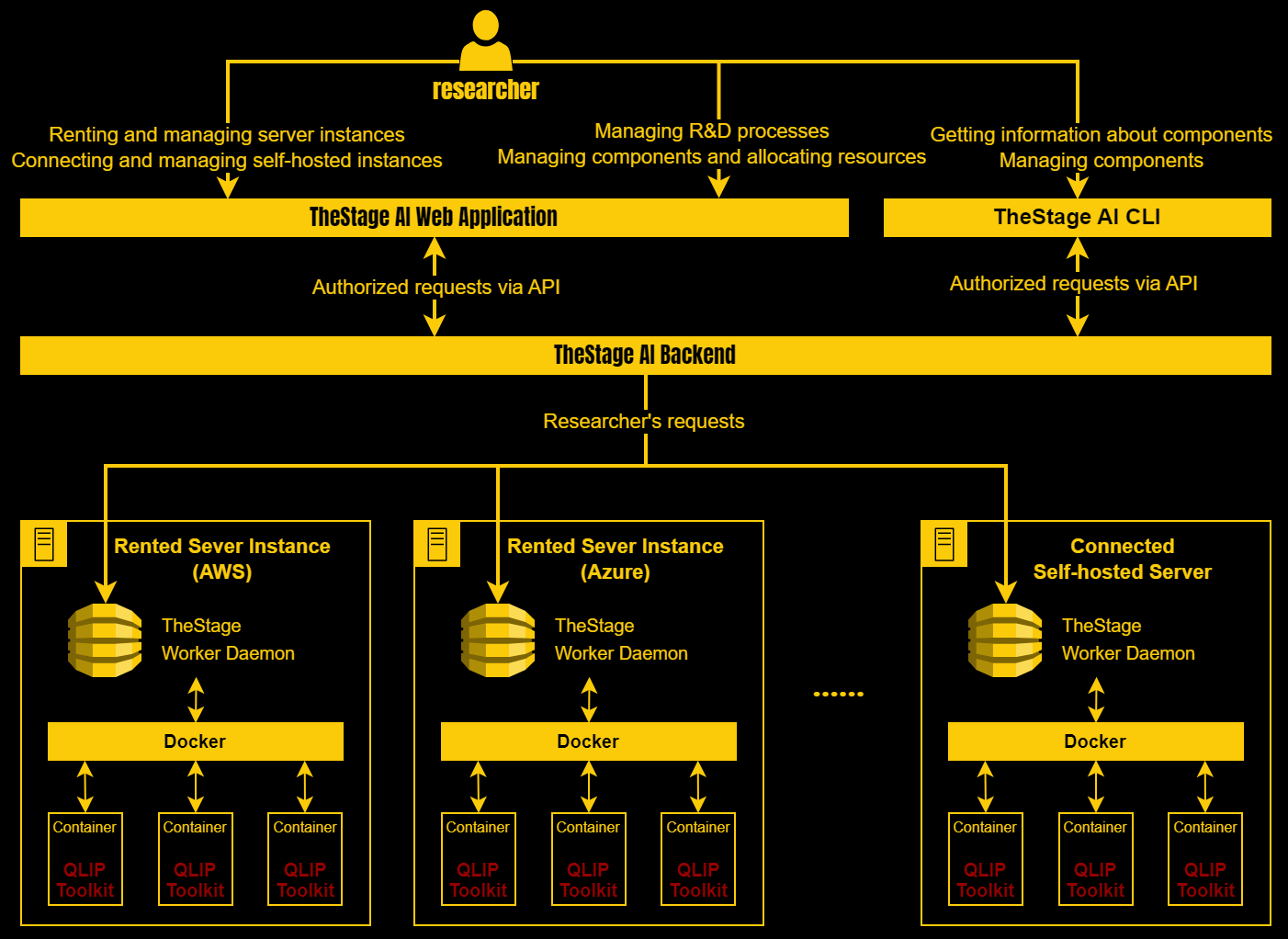
Scheme 1. TheStage AI Platform Infrastructure.
Web Application
TheStage AI Web application provides a user-friendly interface for all operations related to TheStage AI account and infrastructure management. Researchers can use the Web application to rent and manage server instances, connect self-hosted servers, create and manage containers, and organize projects and tasks.
Backend
TheStage AI backend serves as the control center, maintaining detailed records of all compute nodes, containers, tasks, and the operational statuses of these elements. It authorizes and authenticates API requests from both the Web application and the CLI, ensuring secure and efficient management of the infrastructure.
Worker Daemon
TheStage AI worker daemon is an agent that runs on each rented or connected server instance. It is responsible for executing researchers’ requests, managing outputs, and reporting the health of the server instance. The daemon also orchestrates the operation of containers and tasks, ensuring smooth and efficient execution.
CLI
While the Web application facilitates full management of the platform, some tasks are more efficiently handled using a tool familiar to researchers: the Command Line Interface (CLI). TheStage AI provides a CLI that enables researchers to perform specific tasks within the infrastructure, such as running tasks within projects, accessing server instances and containers, through authorized API requests.
QLIP
The heart of TheStage AI is Qlip: a toolkit specifically designed to optimize and streamline quantization, pruning, and inference tasks for neural networks. Qlip enables the development and deployment of more efficient models that can run on resource-constrained devices such as mobile phones and embedded systems. By using Qlip, researchers can achieve significant improvements in model performance and resource efficiency.
The toolkit includes the following components:
Qlip.Train: Contains fine-tuning strategies for frequently used cases. It can be easily customized in terms of model, data, and fine-tuning time.
Qlip.Compress: SDK and a set of quantization and pruning algorithms synchronized with the existing hardware.
Qlip.Deploy: Provides model building and compilation APIs for a wide range of devices.
Qlip.Serve: SDK for deploying inference endpoints on the cloud.
Conclusion
TheStage AI’s integrated platform infrastructure provides researchers with a comprehensive and efficient environment for conducting AI research. By leveraging the Web application, backend services, worker daemons, CLI, and especially Qlip, researchers can seamlessly manage computational resources, optimize models, organize research and development processes, all within a secure and researcher-centric framework.
Where to Start?
Please refer to the TheStage AI Platform: Where to Start article to get started using the features of TheStage AI platform.